Spot your pattern
See the money choices you repeat and the moments that trigger them.
THE BOOK BY FURAHA MOHAMED
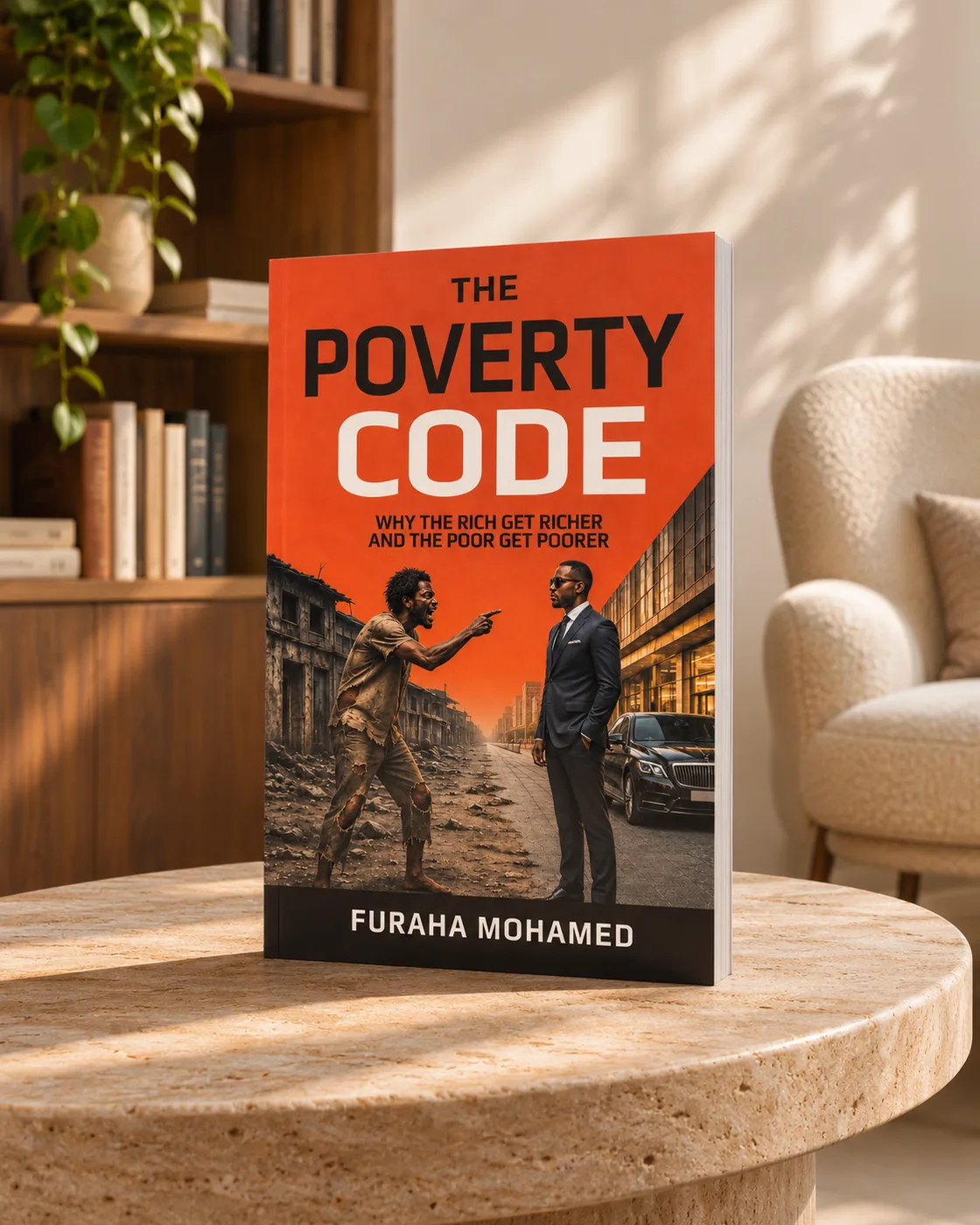
Your subconscious money programming may explain why. The Poverty Code shows how childhood money beliefs can keep shaping adult decisions—and how to begin changing the pattern.
Your poverty code is the set of unwritten money rules you absorbed from family, stress and your surroundings as a child. This subconscious programming can quietly influence how you earn, spend, save, give, negotiate and respond to opportunity—even when your income rises.
PRINT EDITION AVAILABLE NOW • TZS 30,000
Notice the rule. Question it. Make a new choice.
A clear guide to everyday money habits.WHAT THIS LOOKS LIKE IN REAL LIFE
You get a raise, but you still reach the end of the month with nothing left.
You want to save, but you feel guilty because relatives need help. So every request feels like an emergency.
The book helps you slow down, spot the old rule and choose your next step with more care.
WHAT YOU WILL WALK AWAY WITH
See the money choices you repeat and the moments that trigger them.
Connect your habits to lessons from home, pressure and past experience.
Choose simple steps that help you respond differently over time.
This book is for you if... you earn money but cannot explain where it goes, avoid looking at your finances, feel guilty saving, fear asking for better pay or repeat the same money crisis.
This book is not for you if... you want a quick-rich formula, guaranteed income results, stock tips or a book that blames every money problem on mindset.
START WITH YOUR OWN PATTERN
Take a private five-minute assessment. See the patterns your answers may point to, receive practical exercises and send the full report to your email.
Take the money-pattern assessment →EVERYDAY EXAMPLES
Start with one situation you recognise. Try one small change the next time it comes up.
If you still run out of money before payday, look at what changed in your spending after the raise.
Notice which money rule you fall back on during a slow week. Pick one small step you can repeat even when work is busy.
Decide what you can afford to give before a request comes in. You can care for someone and still set a limit.
Set aside ten minutes to look at one bill and write down the next step. You don’t have to fix everything today.
Write down what you could lose and what you could learn. Look for a small way to test it before committing.
INSIDE THE POVERTY CODE
How your surroundings teach you what money, success and possibility look like.
How living with too little can shape choices, fear and what feels safe.
How scarcity, stress and a “bandwidth tax” can narrow attention and make urgent needs feel bigger than long-term plans.
How to notice an automatic response, regulate stress and choose a different action.
How neuroplasticity and small repeated actions can help the brain learn a healthier money response.
How your social environment, daily routines and support system can make a new habit easier to maintain.
THE SCIENCE BEHIND THE BOOK
The book draws from behavioural psychology, neuroscience and research on scarcity. You will meet the proper scientific terms, but each one is explained through choices people make in real life. Science can help explain a pattern. It does not define your future.
When money is tight, the most urgent bill can take over your attention. Researchers call this tunnelling. It can leave less mental space for planning and comparing choices—sometimes called a bandwidth tax.
Mani, Mullainathan, Shafir & Zhao, 2013Long periods of financial stress can affect mood, patience and risk-taking. This does not mean a person is careless. It means pressure can change how a choice feels in the moment.
Haushofer & Fehr, 2014A repeated situation can trigger the same response until it starts to feel automatic. Psychology describes this as habit formation. A new response becomes easier when it is practised again and again.
Lally, van Jaarsveld, Potts & Wardle, 2010The adult brain can change through learning and repeated practice. This ability is called neuroplasticity. It does not promise instant change, but it helps explain why new responses can be learned over time.
Draganski et al., 2004Mani, A., et al. (2013). “Poverty Impedes Cognitive Function.” Science. View study ↗
Haushofer, J., & Fehr, E. (2014). “On the Psychology of Poverty.” Science. View study ↗
Lally, P., et al. (2010). “How Are Habits Formed?” European Journal of Social Psychology. View study ↗
Draganski, B., et al. (2004). “Changes in Grey Matter Induced by Training.” Nature. View study ↗
This book is for learning and reflection. It is not medical, mental-health or financial advice. It does not promise wealth or higher income.
BEYOND THE BOOK
The Poverty Code Community will bring readers together for guided practice, honest conversations, mentoring and accountability.
[Program dates, fees and confirmed speakers will be announced.]
Explore the community →
ABOUT THE AUTHOR
Furaha Mohamed is a Tanzanian entrepreneur, marketing strategist and writer.
He wrote The Poverty Code to explore a question many people face: why can income change while old money fears and habits stay?
The book brings together research, reflection and simple exercises. It helps readers look at what shaped their money choices and decide what they want to change next.
“But after more than thirteen years of building businesses, losing money, starting again and pursuing opportunity, I was forced to confront a difficult truth: more money did not automatically produce a different pattern.”Invite Furaha to speak ↗
START READING
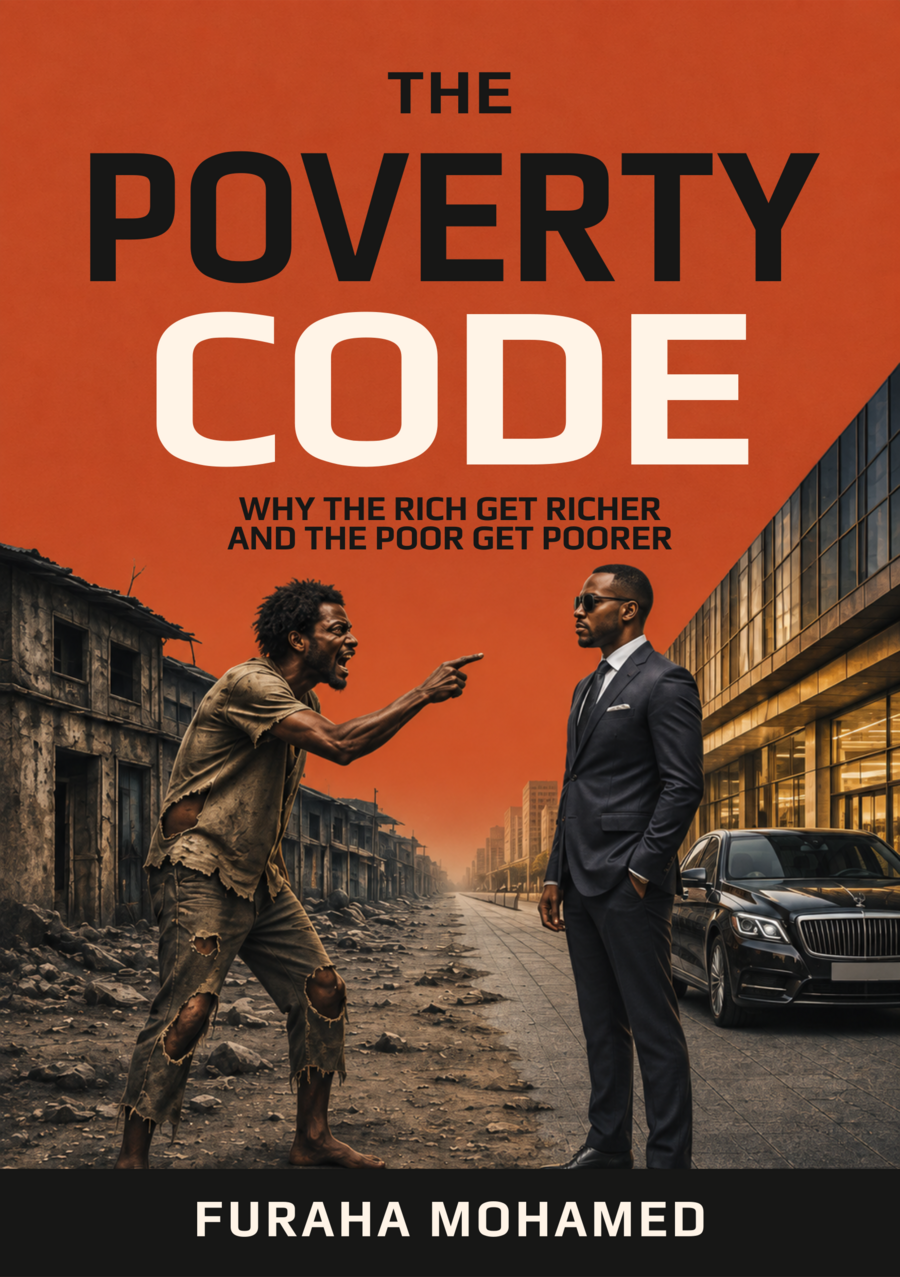
The Poverty Code
By Furaha Mohamed
COMMON QUESTIONS
No. It does not promise wealth or income results. It helps you understand and question the money habits you already have.
Use any order button. WhatsApp will open with a ready message. The team will confirm payment and delivery.
Yes. Visit the Community page and complete the interest form. The team will use your location to help connect you to a nearby gathering when one is available.
Yes. Use the speaking link and share your event date, audience and location.